
P265B Code: 'B' Rocker Arm Actuator Position Sensor Circuit Range/Performance (Bank 1) – Diagnose & Fix with iCarsoft CR Eagle P
If your vehicle experiences rough idle, reduced power, or triggers the check engine light—especially during acceleration or variable valve timing (VVT) operation—the P265B fault code signals a critical issue with your engine’s valve train control. P265B stands for 'B' Rocker Arm Actuator Position Sensor Circuit Range/Performance (Bank 1), an OBD-II powertrain code triggered when the Engine Control Module (ECM) detects the sensor’s signal (voltage or resistance) falls outside the manufacturer’s specified range for Bank 1. The rocker arm actuator position sensor monitors the VVT system’s mechanical movement, ensuring precise valve timing for optimal power and efficiency. A range/performance fault disrupts this calibration, risking engine wear and decreased fuel economy. Generic OBDII scanners only flag the sensor issue without context, but the iCarsoft CR Eagle P—the OE-level professional diagnostic tool with deep engine and VVT system access—lets you pinpoint the exact cause of P265B, repair it yourself, and clear the code in minutes. This comprehensive guide breaks down everything you need to know about P265B, from its core causes and telltale symptoms to why the iCarsoft CR Eagle P is the ultimate solution for resolving this valve train-related fault for good.
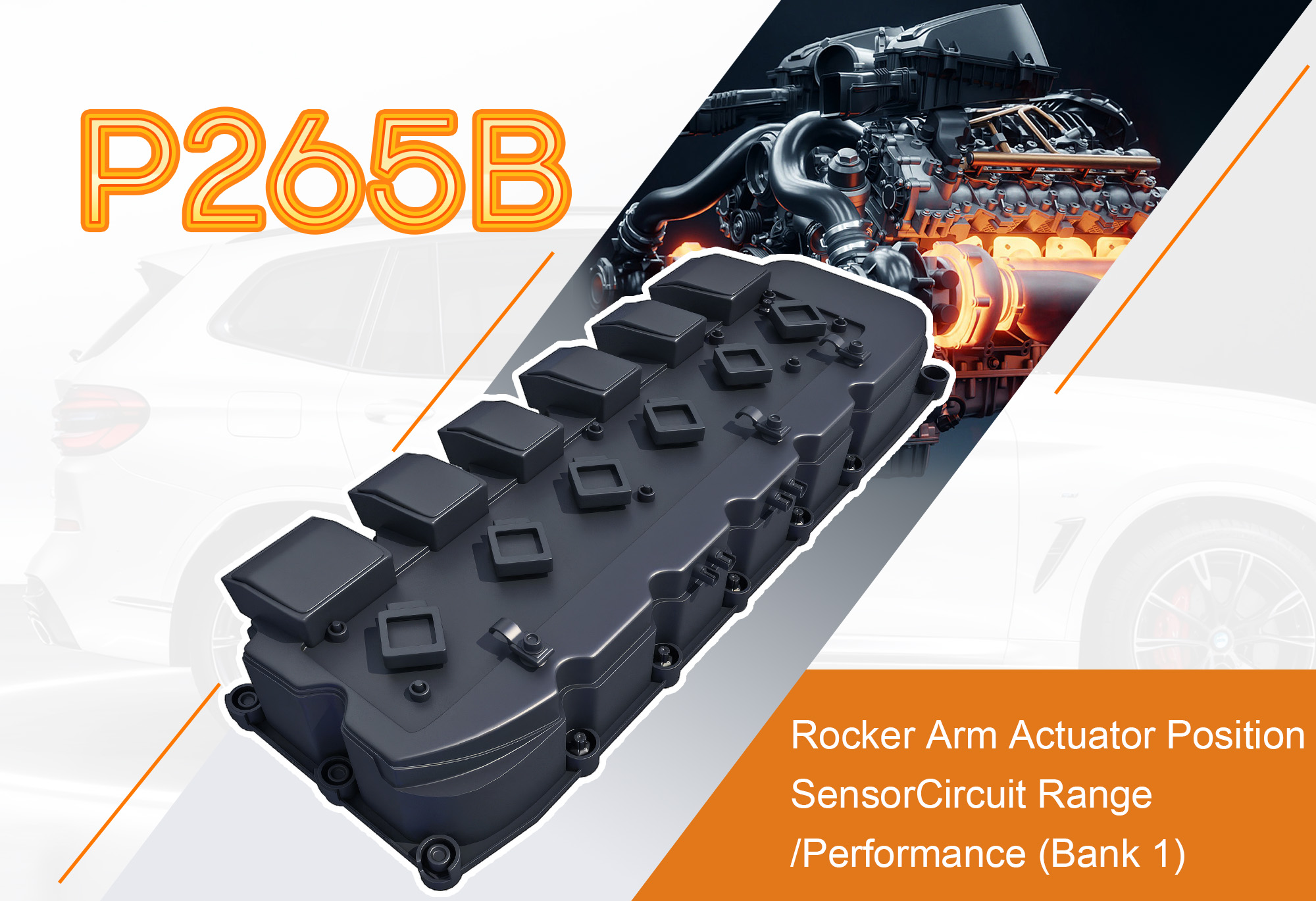
What Is the P265B Fault Code?
The P265B diagnostic trouble code (DTC) is a powertrain code focused on variable valve timing control, triggered when the ECM detects the 'B' Rocker Arm Actuator Position Sensor Circuit (Bank 1) is producing signals outside the acceptable range (typically 0.5–4.5V for most vehicles). Here’s a breakdown of key components:
'B' Rocker Arm Actuator Position Sensor (Bank 1): A precision sensor mounted near the rocker arm actuator (part of the VVT system) on Bank 1 (the side of the engine housing cylinder 1). It tracks the actuator’s position, relaying data to the ECM to adjust valve timing based on engine load and RPM. The “B” designation identifies it as the secondary sensor (complementing the “A” sensor) in dual-sensor VVT setups.
Circuit Range/Performance: A “range/performance” fault indicates the sensor’s signal is too high, too low, or erratic—caused by wiring issues, sensor degradation, actuator jams, or electrical connection problems. This prevents the ECM from accurately regulating valve timing.
Engine Impact: When the ECM logs P265B, it may default to a fixed valve timing map, reducing power, increasing fuel consumption, and triggering rough idle. Ignoring this code leads to premature camshaft wear, reduced compression, and potential VVT system failure.
Key Symptoms of a P265B 'B' Rocker Arm Actuator Position Sensor Circuit Fault
P265B symptoms are tied to disrupted valve timing and worsen under engine load. If you notice any of these signs alongside a lit check engine light, it’s time to scan your vehicle with the iCarsoft CR Eagle P:
- Illuminated check engine light (MIL) – the primary and most consistent symptom
- Rough idle or engine hesitation (especially during cold starts or low RPM)
- Reduced engine power and sluggish acceleration (VVT system fails to optimize valve timing)
- Poor fuel efficiency (10–15% drop in MPG from inefficient combustion)
- Engine misfires (uneven power delivery from incorrect valve timing)
- Unusual engine noise (tickling or rattling from the VVT actuator area)
- Failed emissions tests (incomplete combustion from valve timing imbalance)
- Dashboard warning messages (e.g., “Engine Performance Fault” on modern vehicles)
Common Causes of the P265B Fault Code
P265B is almost always linked to the 'B' rocker arm actuator position sensor, its electrical circuit, or VVT system components—it rarely involves major engine mechanical failure, making it a manageable repair for most DIYers with the right diagnostic tool. The iCarsoft CR Eagle P pinpoints the exact root cause, while generic scanners only label the code without context. These are the most frequent culprits behind P265B, ranked by real-world repair occurrence:
- Faulty 'B' Rocker Arm Actuator Position Sensor (internal electrical failure – top cause)
- Frayed, broken, or shorted wiring in the sensor circuit (vibration or heat damage)
- Corroded, loose, or water-damaged electrical connectors at the sensor or ECM
- Jammed or malfunctioning rocker arm actuator (prevents sensor from detecting position)
- Low engine oil pressure (VVT system relies on oil pressure to operate, affecting actuator movement)
- Contaminated engine oil (sludge clogs the actuator, disrupting sensor readings)
- ECM software glitches (incorrectly interpreting sensor signals, extremely rare)
- Aftermarket engine modifications (e.g., performance camshafts) incompatible with sensor calibration
Why the iCarsoft CR Eagle P Is the Ultimate Tool for P265B Code Diagnosis & Clearing
Generic OBDII scanners can only read the P265B code and state the “range/performance” issue—they cannot access live VVT data, bi-directional tests, or OE-level engine diagnostics needed to find the real cause. The iCarsoft CR Eagle P is engineered with professional-grade features tailored to engine and VVT systems, leveraging its robust hardware and deep multi-system access. Here’s why it stands out for DIYers and mechanics:
Directly connects to the ECM to retrieve manufacturer‑specific P265B details—including real-time sensor voltage, actuator position, and VVT oil pressure data no generic scanner can see. Supports 58 major vehicle makes.
Analyzes sensor signal patterns and circuit performance to identify the exact fault (bad sensor, wiring damage, actuator jam), eliminating guesswork and costly misdiagnoses.
Activates the rocker arm actuator and tests the 'B' sensor directly from the tool—verifies function without valve train disassembly, saving hours of labor.
Bluetooth & dual‑band Wi‑Fi let you monitor sensor voltage, VVT timing, and oil pressure in real time—catch fluctuations basic tools miss.
Built-in VVT calibration and Engine Control Service (48 makes) restore perfect ECM‑sensor communication after repairs.
Inspect hard-to-reach sensors, connectors, and actuators for corrosion or sludge—no engine teardown required.
4GB RAM + 128GB ROM, Android 10.0, Quad‑Core 2.0 GHz, 14 OBDI adaptors, and full CAN‑FD support for all vehicles.
One‑click Wi‑Fi updates + data logging to track intermittent P265B faults that appear under specific engine conditions.
How to Use the iCarsoft CR Eagle P to Diagnose & Clear P265B
- Plug the iCarsoft CR Eagle P into your vehicle’s OBDII port (use OBDI adaptors for pre‑1996 models).
- Connect via Bluetooth or use the built‑in 10.1‑inch touchscreen directly.
- Select your make, model, year, and engine—Auto VIN Identify auto‑loads system data.
- Navigate to Engine System > Variable Valve Timing (VVT) Control and run a full scan for P265B.
- Review live data for 'B' sensor voltage, VVT timing, and engine oil pressure.
- Use the videoscope to inspect components; run bi‑directional tests to verify operation.
- Perform repairs (replace sensor, fix wiring, clean actuator, change oil, etc.).
- Use Engine Control Service to calibrate the VVT system for proper valve timing.
- Clear P265B fault codes and turn off the check engine light.
- Run an ECM reset and re‑scan to confirm full resolution.
FAQ: Everything You Need to Know About P265B & the iCarsoft CR Eagle P
Bank 1 is the engine side with cylinder #1. The 'B' sensor is the secondary VVT rocker arm position sensor on Bank 1. The CR Eagle P provides exact location diagrams for any vehicle.
Short emergency drives only. P265B damages camshafts and VVT actuators over time. Avoid high loads or high speeds until fixed to prevent $1,000+ in repairs.
No. Basic scanners only read the code. They can’t test VVT components, monitor voltage, or inspect actuators. Only the iCarsoft CR Eagle P provides full OE‑level diagnostics.
Sensor: $95–$300. Wiring/connectors: $20–$100. Actuator service: $150–$400. Oil change: $60–$150. The tool eliminates $300–$600 dealer fees.
Yes. It displays live voltage, compares to factory specs, and flags anomalies. Bi-directional tests confirm full sensor and actuator function.
Yes. The CR Eagle P includes automatic VVT calibration to restore perfect valve timing—no dealership visit needed.
Absolutely. It handles P265A–P265F, P0010–P0029, and all valve train / VVT faults across full engine systems.
Yes. It includes 14 OBDI adaptors for 1990s vehicles and lifetime updates for full coverage.
Why Ignoring the P265B Code Leads to Costly Engine Damage
While P265B may seem like a minor sensor issue, ignoring it turns an affordable repair into a financial disaster:
- VVT Actuator Failure – $150–$400 replacement
- Camshaft Wear from incorrect timing – $1,000+ in repairs
- Reduced Engine Compression and permanent power loss
- 10–15% higher fuel costs every year
- Premature failure of the “A” sensor from overwork
Final Thoughts: Resolve P265B for Good with the iCarsoft CR Eagle P
The P265B 'B' Rocker Arm Actuator Position Sensor Circuit Range/Performance (Bank 1) code doesn’t have to be a stressful, expensive problem. With the iCarsoft CR Eagle P, you have an OE-level diagnostic tool that gives you the same engine system access as a dealership technician—at a fraction of the cost. Its real-time sensor monitoring, bi-directional testing, videoscope compatibility, and VVT-specific service functions make it perfect for DIYers, while its robust hardware, 58-make coverage, and lifetime free updates make it a must-have for mechanics and fleet managers.
Don’t let a faulty rocker arm actuator sensor damage your engine or drain your wallet. Get the iCarsoft CR Eagle P today and take control of your vehicle’s diagnostics—resolve P265B accurately, affordably, and for good, and get back on the road with complete confidence in your engine’s power and reliability.
Disclaimer: This guide is for informational purposes only. Always consult your vehicle’s service manual or a certified automotive technician before performing engine or VVT system repairs. iCarsoft is not responsible for damage from improper tool use or vehicle maintenance.