
Understanding OBD-II Code P0403: Exhaust Gas Recirculation Circuit Malfunction
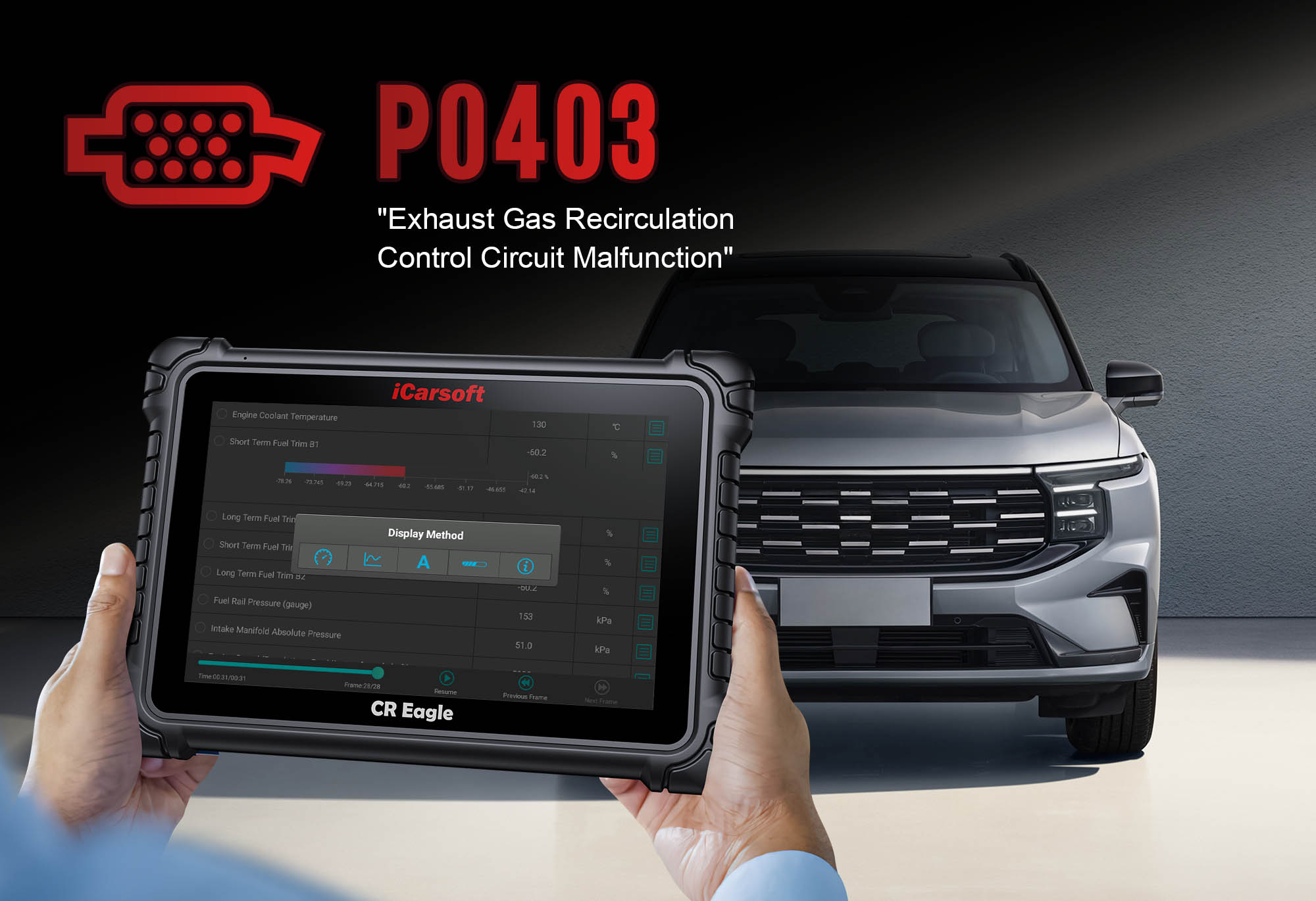
When your vehicle displays the diagnostic trouble code P0403, it signals an Exhaust Gas Recirculation (EGR) circuit malfunction. This generic OBD-II code means the engine control module (ECM) has detected either an open or short circuit in the EGR vacuum control solenoid or its wiring.
Why It Matters
Although P0403 might not lead to immediate engine failure, ignoring it can trigger decreased fuel efficiency, heightened emissions, and even engine damage down the line. Additionally, with the EGR system disabled, your vehicle likely won’t pass emissions tests. The EGR system reduces nitrogen oxide (NOx) emissions by recirculating a portion of exhaust gases back into the intake manifold, lowering combustion temperatures. A malfunctioning system disrupts this process, harming both performance and the environment.
Common Causes of P0403
| Cause | Description |
|---|---|
| Faulty EGR Vacuum Control Solenoid | The most common culprit—internal electrical failure prevents the solenoid from opening/closing to control EGR flow. |
| Wiring/Connector Issues | Corrosion, loose terminals, or damaged wires in the solenoid-to-ECM circuit disrupt electrical signals. |
| Defective EGR Valve | A stuck or worn valve can cause excessive current draw on the solenoid, triggering circuit faults. |
| Carbon Buildup | Blocked EGR passages or valve sticking due to carbon deposits forces the solenoid to work harder, leading to circuit stress. |
| Vacuum Leaks or ECM Issues | Leaking vacuum lines disrupt EGR operation; rarely, ECM software glitches or hardware faults misdetect circuit issues. |
Recognizing Symptoms
While sometimes only the Check Engine Light appears, more pronounced signs include:
- Rough or unstable idle: Especially if the EGR valve remains open, disrupting air-fuel mixture at low speeds.
- Misfires, stalling, or spark knock: Less common but possible if exhaust gas recirculation becomes unregulated.
- Noticeable fuel odor from the exhaust: Richer fuel mixtures due to EGR dysfunction can cause unburned fuel in exhaust.
- Pre-ignition risk: The ECM may disable the EGR system, increasing combustion temperatures and risking engine damage.
Diagnosing P0403: Step-by-Step
-
Scan for Additional Fault Codes
Use an OBD-II scanner (like the iCarsoft CR Eagle) to check for related codes (e.g., P0401 for insufficient EGR flow, P0404 for valve position issues) and address them first, as they may contribute to P0403.
-
Clear Codes and Monitor Live Data
Clear P0403, take a test drive, and use the scanner to monitor EGR solenoid "Command" and "Actual" status. If the code returns, note conditions (idle, acceleration) to narrow causes.
-
Visual Inspection of Wiring and Connectors
Inspect the EGR solenoid wiring harness for fraying, cuts, or corrosion. Check the connector for bent pins, dirt, or moisture—clean with electrical contact cleaner if needed.
-
Electrically Test the EGR Solenoid
Disconnect the solenoid connector. Use a multimeter to test resistance (typically 20–60 ohms). A reading of 0 ohms (short) or infinite ohms (open) confirms a faulty solenoid.
-
Check for Carbon Buildup
Remove the EGR valve and inspect passages for carbon deposits. Clean with a specialized EGR cleaner if blocked—buildup can cause valve sticking and solenoid strain.
-
Test Vacuum Lines and EGR Valve Operation
Check for cracked or disconnected vacuum lines feeding the EGR valve. Manually apply vacuum to the valve (using a hand pump) to ensure it opens/closes smoothly—sticking indicates a faulty valve.
Effective Repair Strategies
Depending on diagnostic findings, common fixes include:
- Replace the EGR Vacuum Control Solenoid: If electrical testing confirms failure, install a high-quality OEM or aftermarket solenoid.
- Repair or Replace Wiring/Connectors: Fix frayed wires with heat-shrink connectors; replace severely damaged harnesses or corroded connectors.
- Replace the EGR Valve: If the valve is stuck, worn, or damaged (even after cleaning), replace it to restore proper function.
- Repair Vacuum Leaks: Replace cracked vacuum lines and ensure secure connections to the solenoid and valve.
- Thorough Carbon Cleaning: Clean EGR passages, intake manifold, and valve with specialized cleaners to remove blockages.
Estimated repair costs generally range from $100 to $800, depending on parts (solenoid: $30–$150; valve: $50–$400) and labor.
Pro Tip: iCarsoft CR Eagle for EGR Circuit Troubleshooting
The iCarsoft CR Eagle simplifies P0403 diagnosis with EGR-specific features:
Bi-directionally controls the EGR solenoid to verify it opens/closes on command—confirms solenoid function without manual testing.
Streams real-time data like "EGR Command" (ECM signal) and "EGR Position" (valve movement) to identify mismatches indicating circuit issues.
Detailed diagrams show EGR solenoid, valve, and wiring locations for your vehicle (from Ford to Mercedes), eliminating guesswork during inspection.
Measures vacuum pressure at the EGR valve to identify leaks or insufficient flow, which can strain the solenoid circuit.
Summary Table
| Step | Action |
|---|---|
| 1 | Scan and clear codes; check for related EGR issues |
| 2 | Visual inspection of wiring/connectors for damage |
| 3 | Electrical testing of EGR solenoid (resistance check) |
| 4 | Clean carbon buildup in EGR valve and passages |
| 5 | Replace solenoid, valve, or fix wiring/vacuum as needed |
| 6 | Use iCarsoft CR Eagle for precise diagnostics and verification |
Final Thoughts
Dealing with OBD-II code P0403 early prevents expensive repairs and keeps your vehicle emission-compliant. The EGR system plays a critical role in reducing emissions and maintaining engine efficiency, so addressing circuit malfunctions promptly is key.
With the iCarsoft CR Eagle’s EGR-specific diagnostics—solenoid activation tests, live data monitoring, and component guides—you can accurately pinpoint whether the issue is a faulty solenoid, wiring damage, or carbon buildup. Trust the CR Eagle to streamline repairs and restore your EGR system to optimal performance.